Common surfaces · six structure families
Common surfaces and adsorption sites
Compare how FCC, BCC, HCP, SC, SH, and BCT crystals respond to common crystallographic cuts. Each guide connects the Miller plane, exposed atomic structure, subsurface registry, adsorption sites, and a rotatable slab.
New to the notation? Begin with how Miller planes cut a bulk crystal.
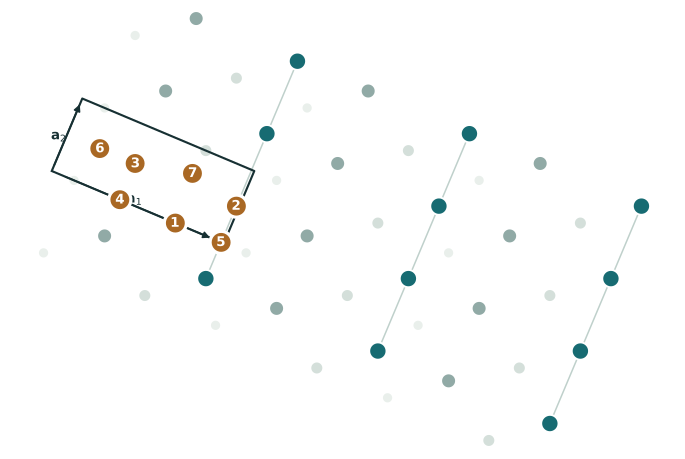
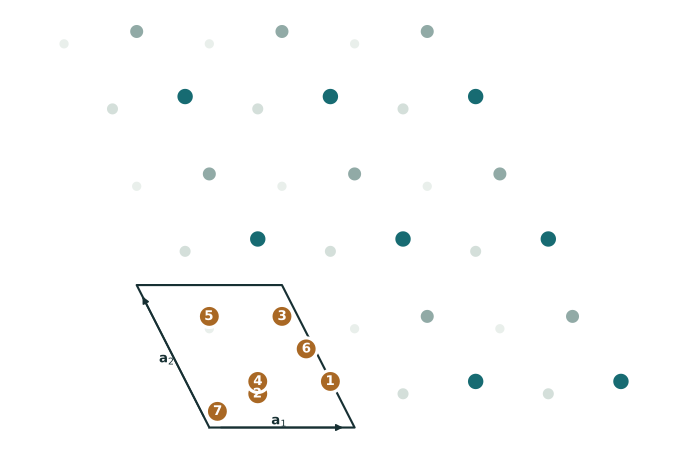
The shade of the atoms indicates the depth of the layer, where paler atoms sit lower. Orange numbers mark constructed adsorption sites.
Face-centred cubic (FCC)
Close-packed faces, open rows, and regular steps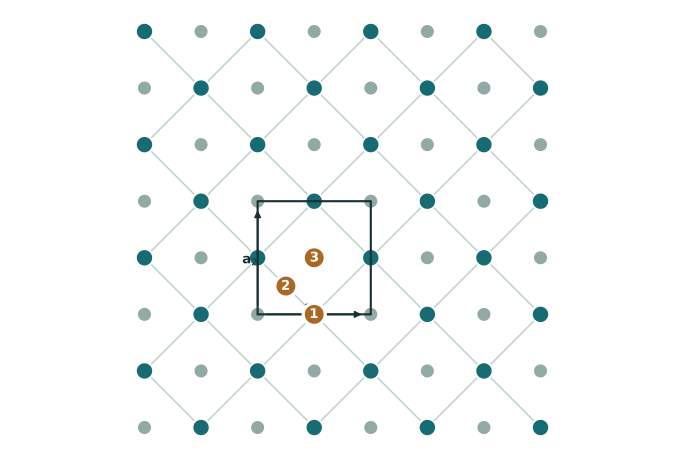
FCC(100) →
A square surface net with a distinctive fourfold hollow.
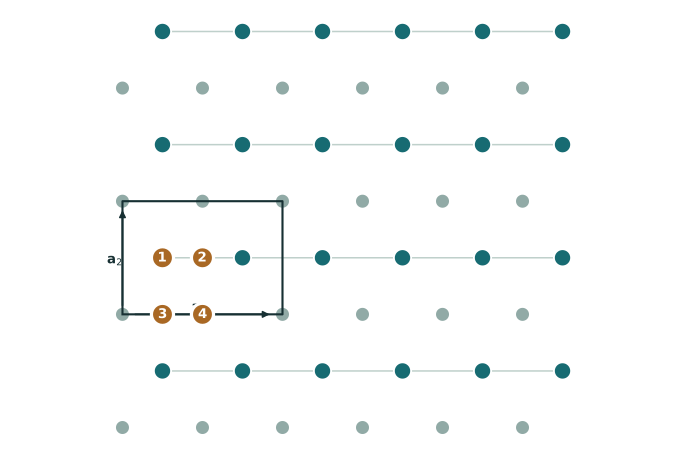
FCC(110) →
Dense atomic rows separated by open, directional troughs.
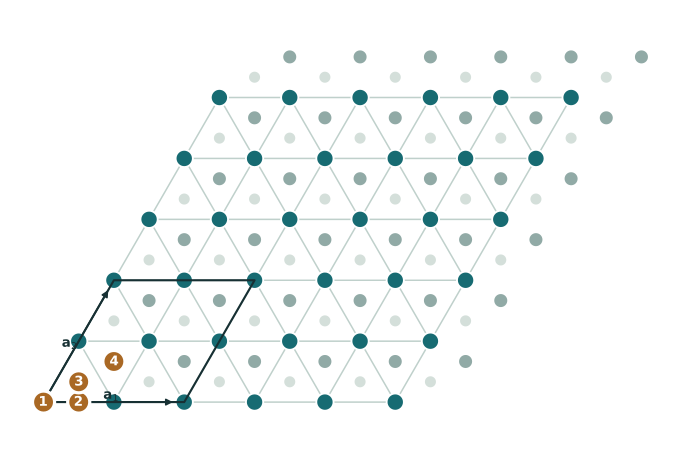
FCC(111) →
The close-packed triangular net with FCC and HCP hollows.
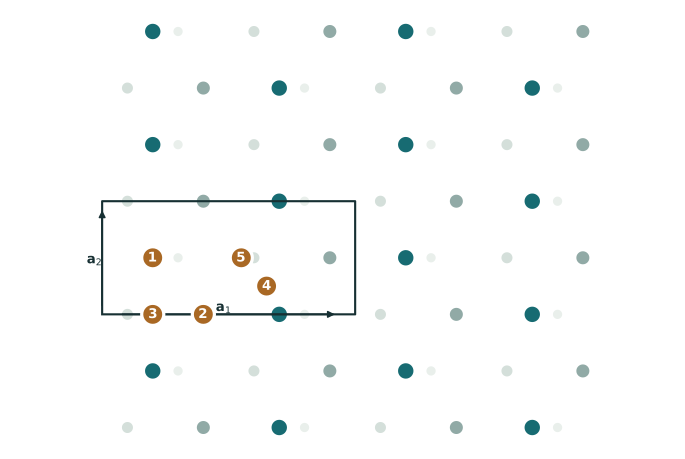
FCC(210) →
A strongly tilted (100)-like surface with closely spaced ledges.
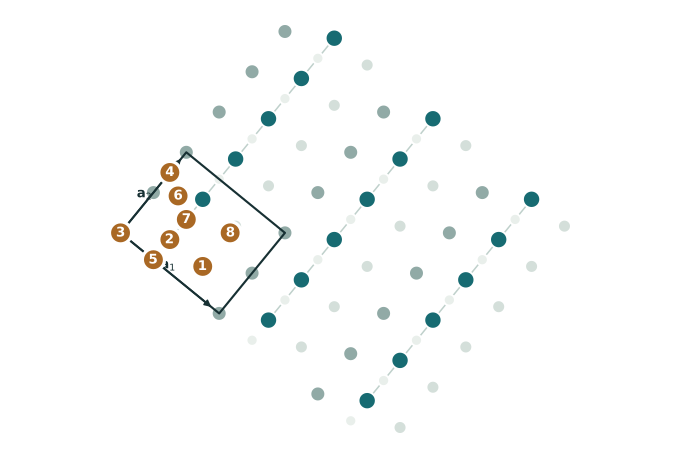
FCC(211) →
Narrow close-packed terraces separated by straight monatomic steps.
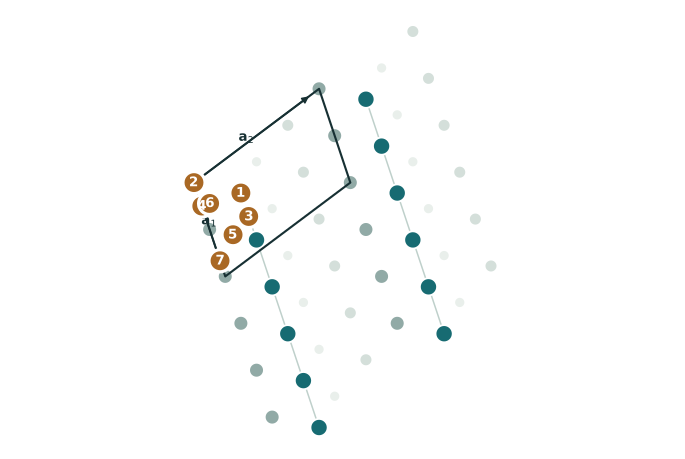
FCC(221) →
A compact stepped net close in orientation to the (111) face.
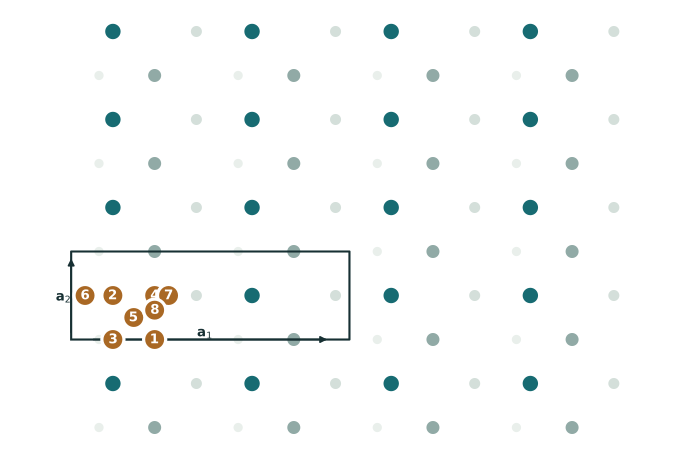
FCC(310) →
Wider (100)-like terraces with long, directional channels.
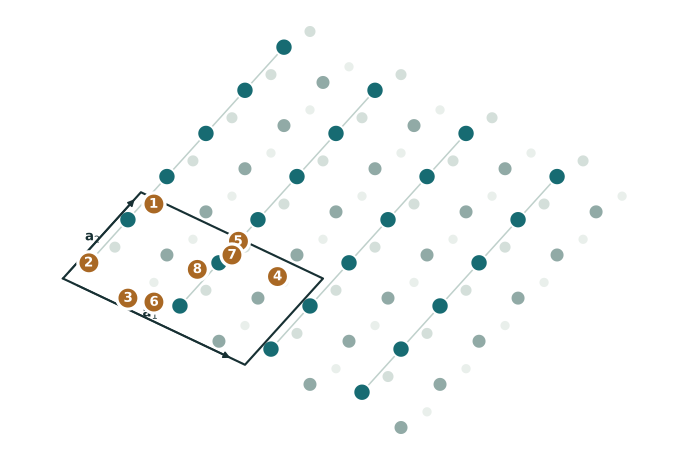
FCC(311) →
Short square terraces interrupted by close-packed step rows.
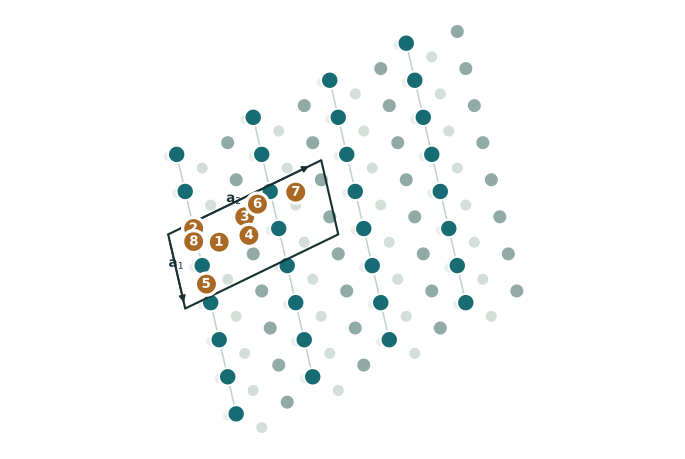
FCC(331) →
A vicinal (111) face with regular straight ledges.
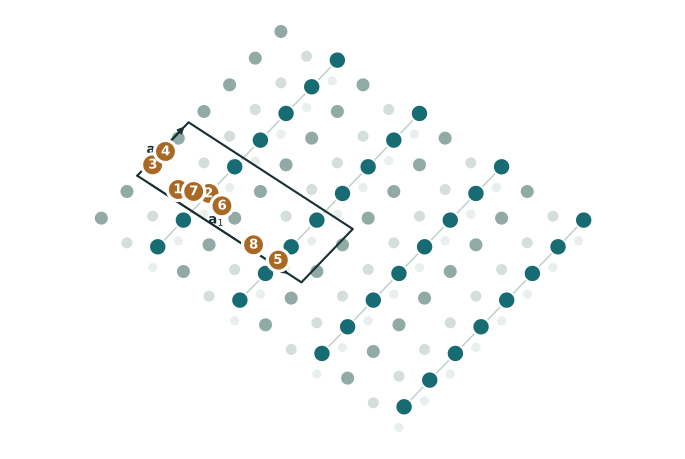
FCC(511) →
Broad square terraces separated by regularly spaced ledges.
Body-centred cubic (BCC)
Dense (110), open low-index faces, and stepped rows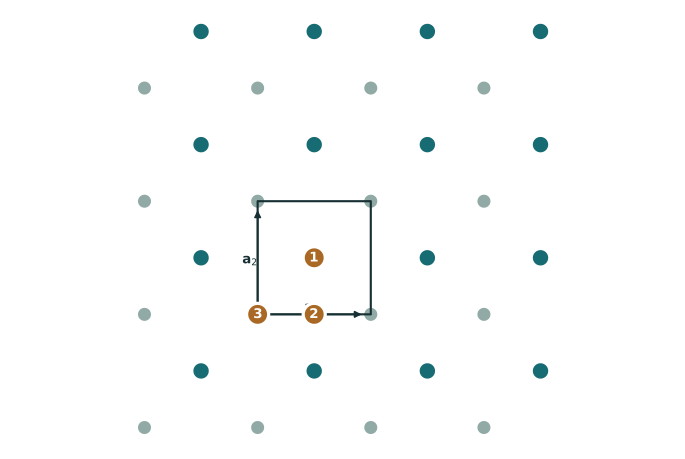
BCC(100) →
A square net whose registry alternates through the body centre.
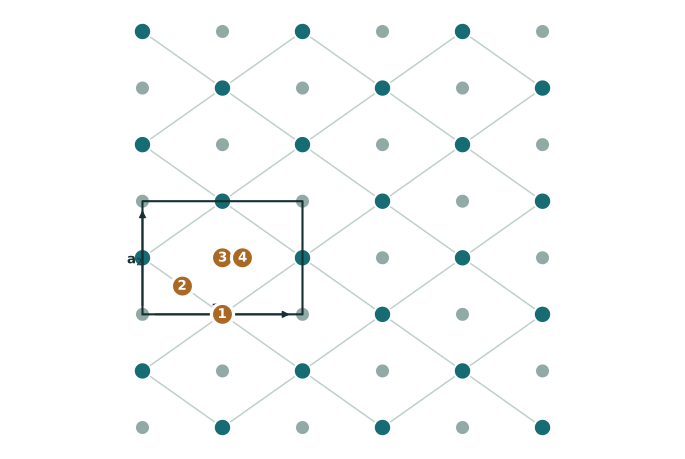
BCC(110) →
The densest BCC face, with zig-zag rows and anisotropic bridges.
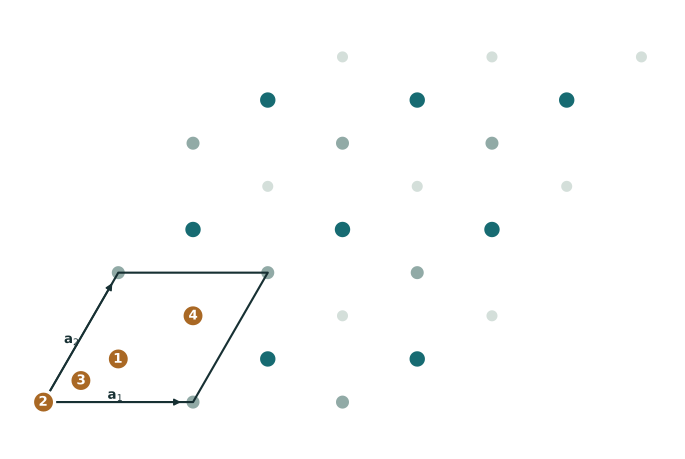
BCC(111) →
An open threefold surface built from several closely spaced levels.
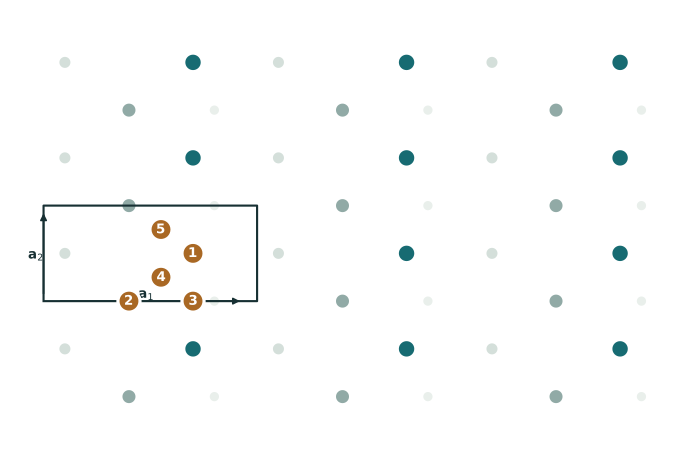
BCC(210) →
A highly open BCC face with sharp ridges and deep channels.
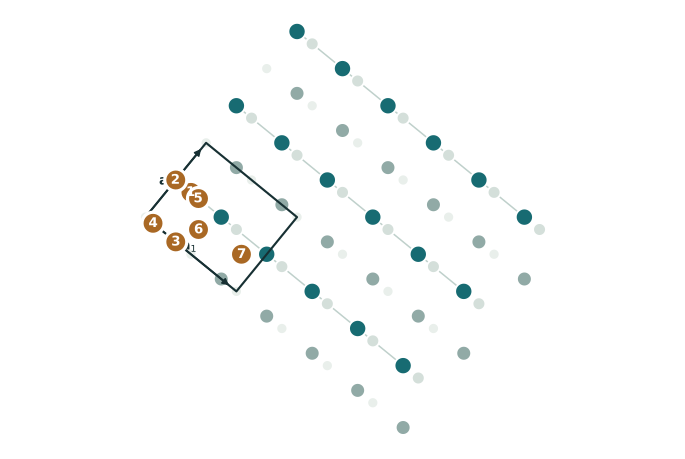
BCC(211) →
Narrow BCC terraces with staggered, directional ledges.
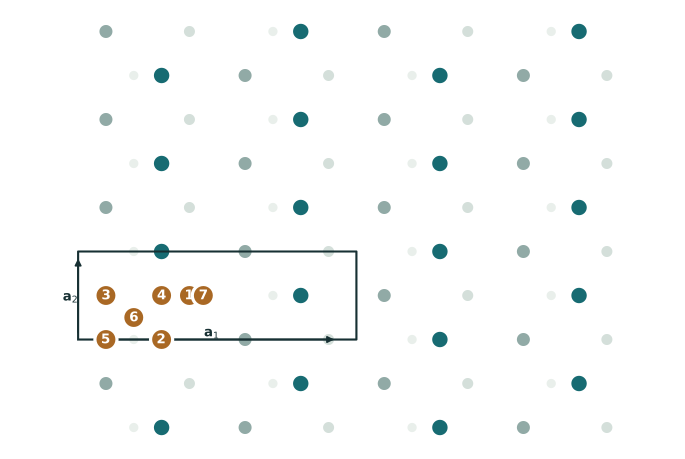
BCC(310) →
Broader BCC terraces separated by straight raised rows.
Hexagonal close packed (HCP)
Basal, prismatic, and pyramidal cuts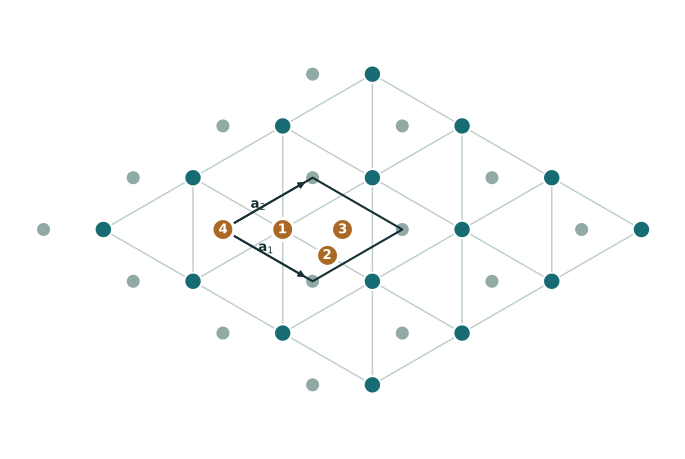
HCP(0001) →
The close-packed HCP basal plane with ABAB stacking.
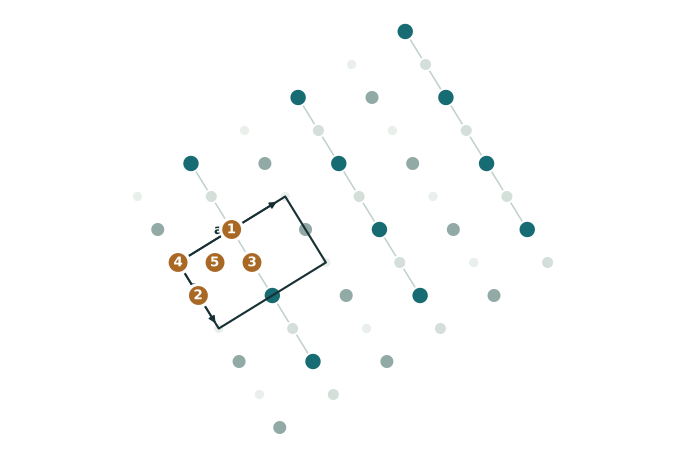
HCP(10-10) →
A nonpolar prism face with distinct basal and c-axis rows.
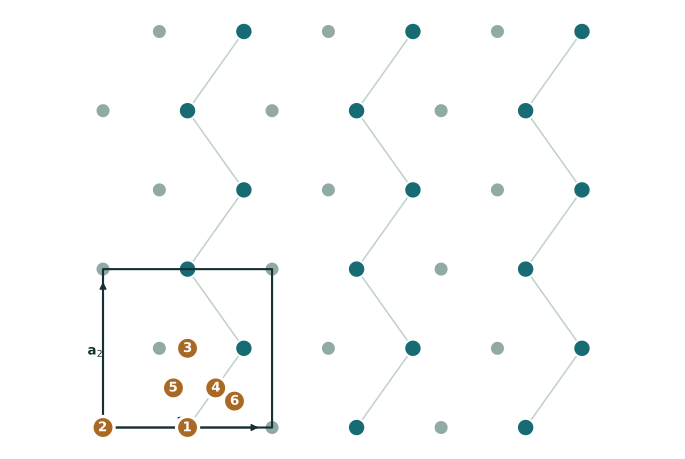
HCP(11-20) →
A prism cut rotated 30° from HCP(10-10).
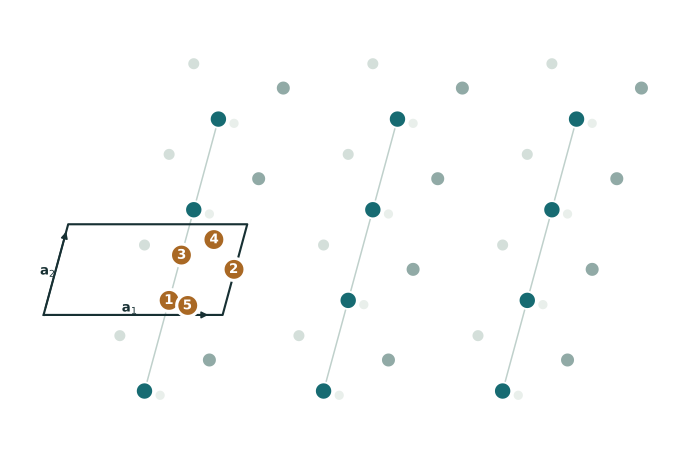
HCP(10-11) →
An oblique HCP cut with mixed basal and axial character.
HCP(10-12) →
A second pyramidal inclination with broader projected terraces.
HCP(11-21) →
A rotated pyramidal cut with strongly staggered ledges.
Simple cubic (SC)
Square and triangular nets with open stepped faces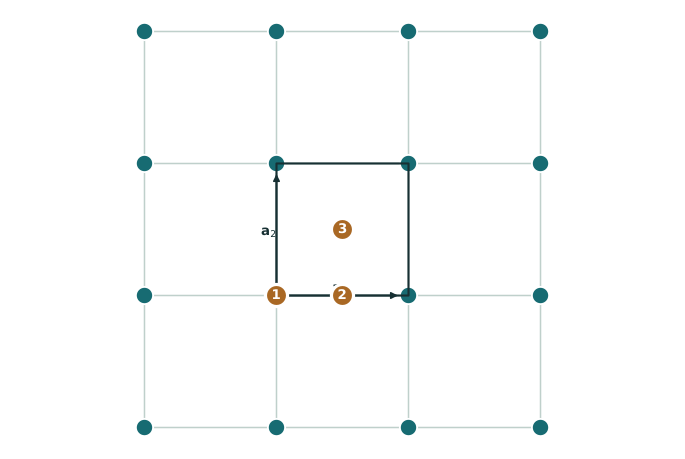
SC(100) →
A primitive square net with ontop, bridge, and fourfold hollow sites.
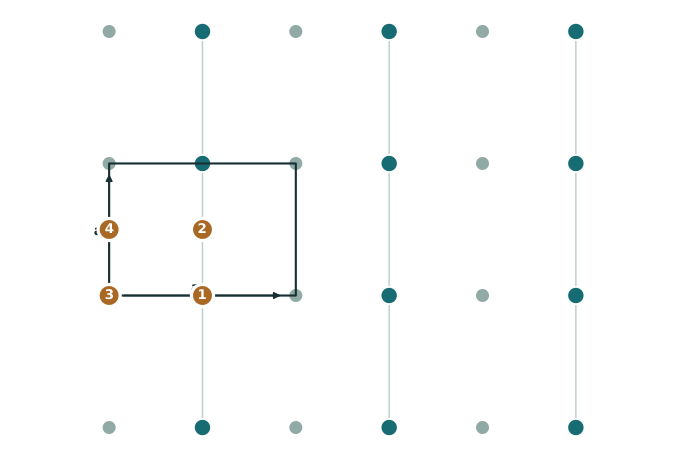
SC(110) →
A rectangular simple-cubic face with two bridge directions.
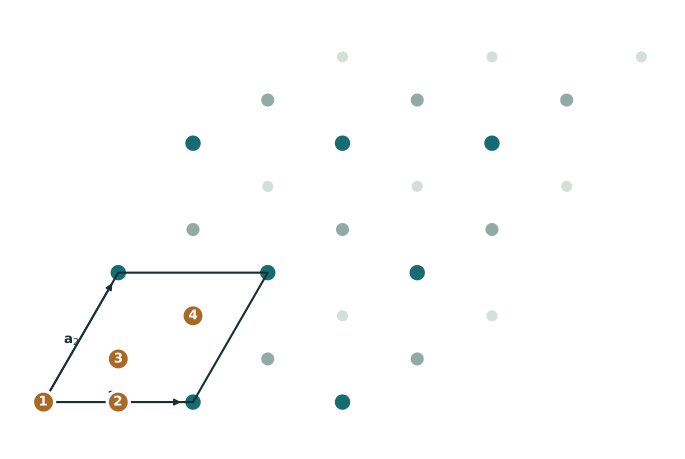
SC(111) →
A triangular net with two subsurface-distinct threefold hollows.
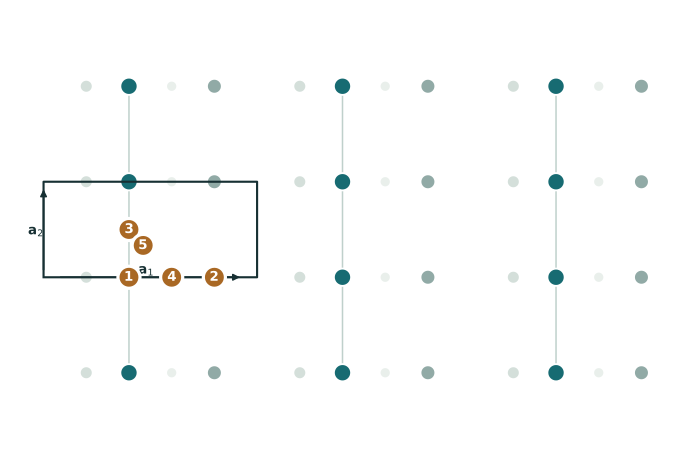
SC(210) →
A short-period staircase of ridges and lower rows.
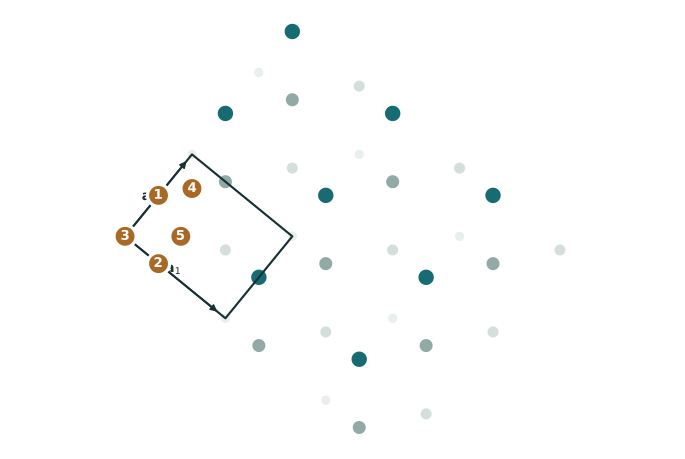
SC(211) →
Corrugated oblique ledges with mixed-height pockets.
Simple hexagonal (SH)
AA-stacked basal, prismatic, and pyramidal cuts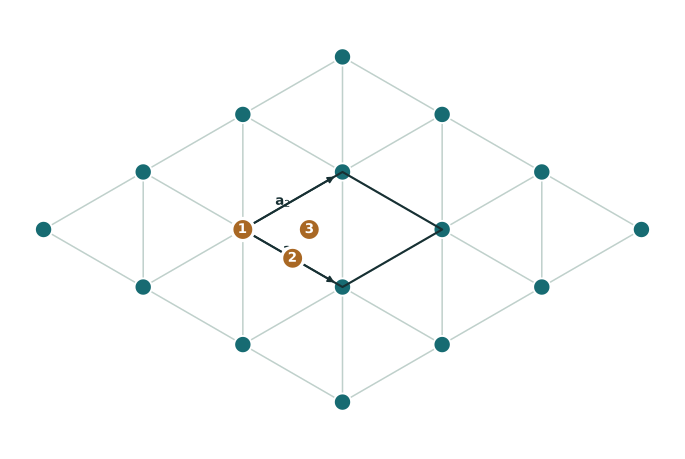
SH(0001) →
A triangular basal net with direct AA layer registry.
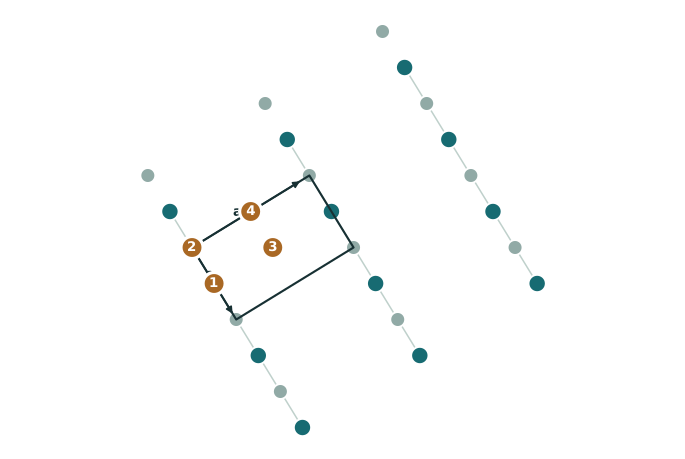
SH(10-10) →
A rectangular prism net with basal and axial bridges.
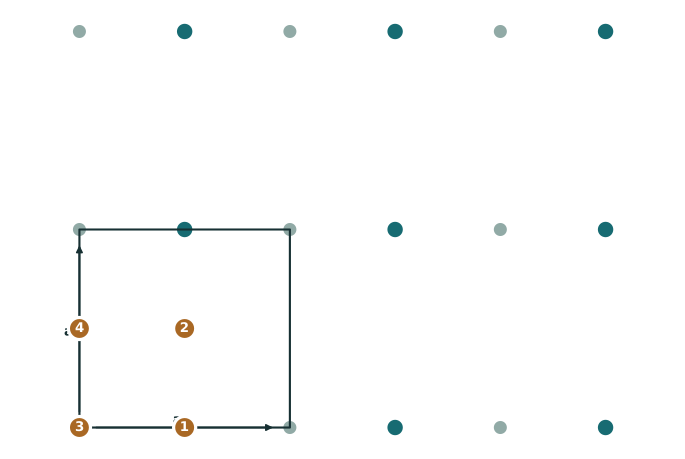
SH(11-20) →
The second prism orientation, rotated 30° in the basal plane.
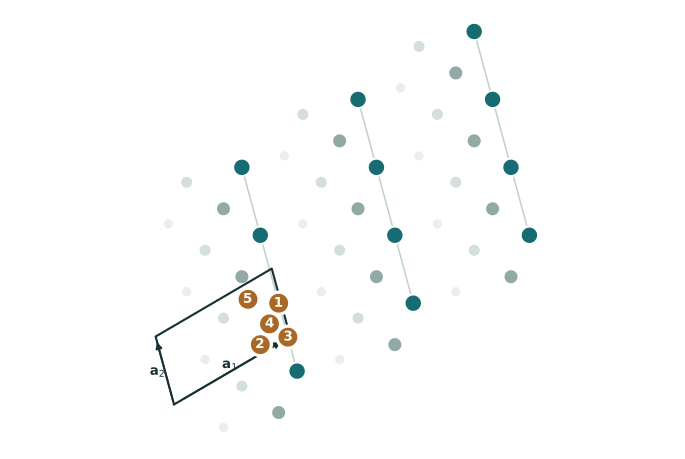
SH(10-11) →
An oblique pyramidal face with mixed basal and axial character.
Body-centred tetragonal (BCT)
Basal, prismatic, mixed-index, and stepped faces with independent a and c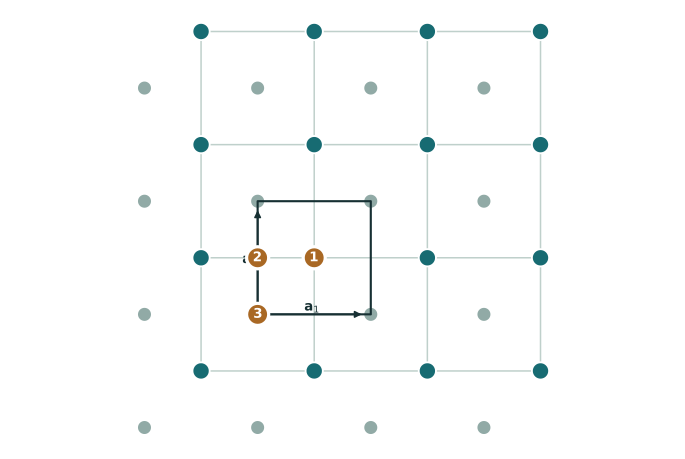
BCT(001) →
A square basal face with c-dependent alternating layers.
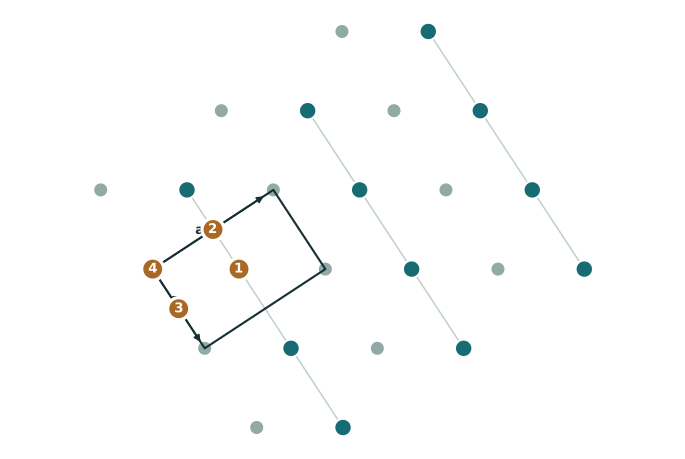
BCT(100) →
A rectangular prism face that makes a and c visibly independent.
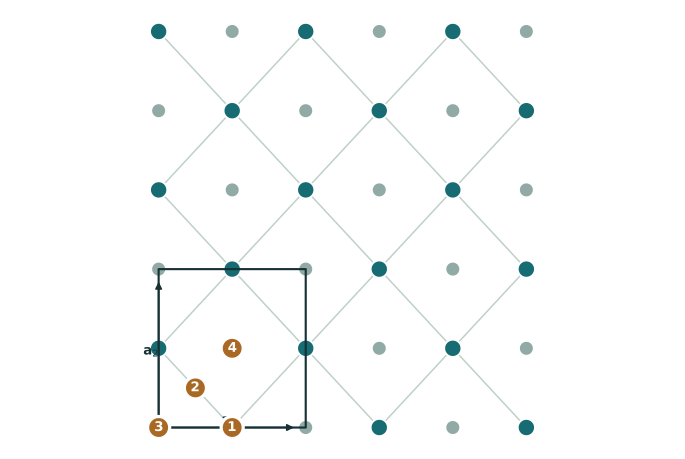
BCT(110) →
A centred rectangular net with three distinct bridge geometries.
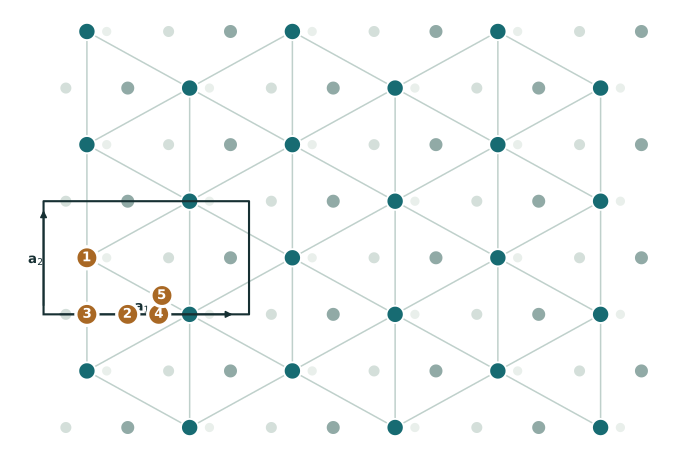
BCT(101) →
A mixed basal–axial face whose inclination depends on c/a.
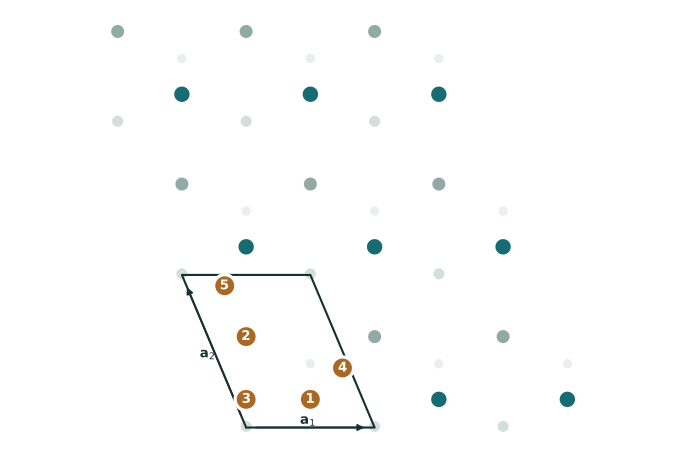
BCT(111) →
An open distorted-triangular face with closely spaced sublayers.
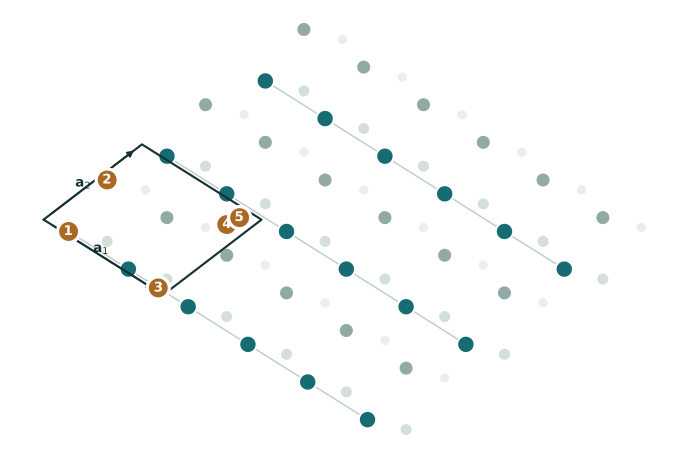
BCT(211) →
A c/a-dependent stepped face with oblique ledges.
What are surface adsorption sites?
Surface adsorption sites are characteristic positions where an atom or molecule can begin interacting with a crystal surface. An ontop site lies above one surface atom, a bridge site spans two neighbouring atoms, and a hollow site sits among three or more atoms. The available sites change with the crystal lattice and Miller indices because every cut exposes a different atomic pattern.
The guides above document familiar low- and high-index facets. For a plane not listed here, use the interactive surface builder to generate its bulk cut, surface cell, atomic layers, and geometric adsorption-site candidates.